Certificate verification · Django · Case study 03
VeriCred
Issue certificates through an approval workflow, then verify their status through a public QR link.
Python / Django / QR codes / SQL
The problem
A certificate is useful only when its status can be checked and its issuance can be attributed. VeriCred separates drafting, approval and issuance, while keeping unpublished certificates private.
The implemented workflow
- An authorized issuer creates and submits a draft.
- A reviewer approves or rejects it; the decision records the reviewer.
- An issuer completes issuance and generates an absolute QR verification URL.
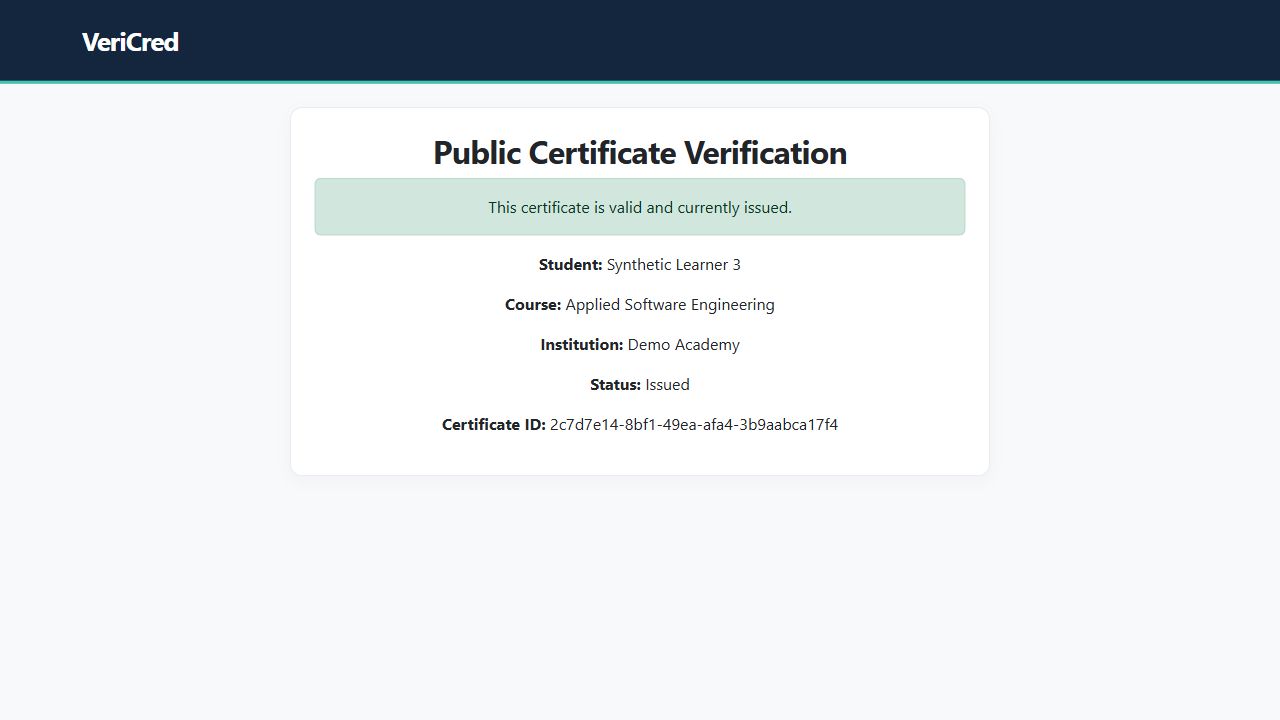
- Anyone can verify an issued certificate; drafts and pending records remain unavailable.
- Authorized staff inspect the audit trail or revoke a certificate.
Architecture and decisions
Django models represent profiles, certificates and audit events. Role and ownership checks guard transitions and editing. Transactions keep workflow changes consistent with their audit entries. The public verification endpoint exposes issued/revoked statuses only; deployment configuration validates its public origin and security settings.
Verified on Windows · 7 October 2026
What was checked
12 tests passed, including unauthorized state changes, cross-owner edits, public visibility, reviewer attribution, absolute QR URLs and rollback after an audit failure. Migrations and secure deployment checks passed. Browser checks covered the dashboard, issued certificate and public verification. The pinned dependencies had zero known advisories at the time of the audit.
Current boundaries
The reviewed update is merged into main. See PR #2 for the review history. PostgreSQL locking and production concurrency were not tested; SQLite does not implement row locks. The application needs operational authentication/rate limits before an Internet deployment. Screenshots contain fictional data.